
Our Services
Insulation Lagging & cladding
TISS (PTY) LTD supply and Install insulation (lagging and cladding) to pipe work, boilers, Tanks, Vessels, Autoclaves, Ducting and all other Hot & Cold applications.
Insulation Lagging & Cladding
Pipe & Tank Insulation
Pipe & Tank Insulation
Thermal Performance
Maintains temperature for improved process control
Reduced Utility Costs
Reduces energy loss, which can lower utility costs
Safety
Protects against elevated surface temperatures
Sound Control
Helps absorb operational noises
Pipe & Tank Insulation
The Importance Of Pipe Insulation
Thermal Performance & Reduced Utility Costs
To effectively do their job, pipes need the right insulation. Whether it’s a natural gas pipe, hot or cold pipe, temperature consistency is crucial. Adding industrial pipe insulation delivers better process control by maintaining the temperature from pipe entry to exit. This can lead to greater operating efficiencies and reduced energy loss — which, in turn, can lead to reduced operating costs.
Condensation Control
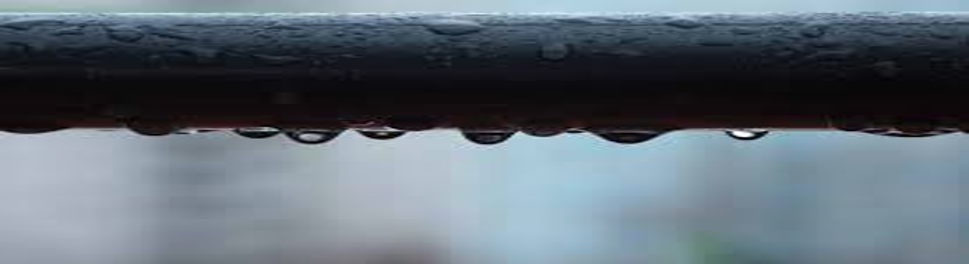
When temperatures aren’t maintained, pipes can often develop condensation, which can lead to pooling water. Proper insulation, with the appropriate facing applied, can help minimize the chance of condensation building up.
Sound Control
During operation, pipes can create vibrations or even banging noises. Pipe insulation can help absorb these excessive operational sounds.
Safety
Elevated temperature pipes can be unsafe to come in contact with. Fiberglass pipe insulation can provide a protective layer over the pipe surface by minimizing the heat transfer. For these high temperatures, you’ll want insulation that can also provide fire protection and reduce the spread of flames.
Expertly Designed
For quick and simple install, you can find pipe insulation that comes in a clamshell design, making it easier to seal in place. Consider a clean, finished look for the space and use insulation with a facing that leaves fewer wrinkles and is easier to wipe clean.
Pipe Insulation is thermal or acoustic insulation used on pipework.
Condensation control
Where pipes operate at below-ambient temperatures, the potential exists for water vapour to condense on the pipe surface. Moisture is known to contribute towards many different types of corrosion, so preventing the formation of condensation on pipework is usually considered important.
Pipe insulation can prevent condensation forming, as the surface temperature of the insulation will vary from the surface temperature of the pipe. Condensation will not occur, provided that (a) the insulation surface is above the dewpoint temperature of the air; and (b) the insulation incorporates some form of water-vapour barrier or retarder that prevents water vapour from passing through the insulation to form on the pipe surface.
Pipe Freezing
Since some water pipes are located either outside or in unheated areas where the ambient temperature may occasionally drop below the freezing point of water, any water in the pipework may potentially freeze. When water freezes it expands and this expansion can cause failure of a pipe system in any one of a number of ways.
Pipe insulation cannot prevent the freezing of standing water in pipework, but it can increase the time required for freezing to occur—thereby reducing the risk of the water in the pipes freezing. For this reason, it is recommended to insulate pipework at risk of freezing, and local water-supply regulations may require pipe insulation be applied to pipework to reduce the risk of pipe freezing.
For a given length, a smaller-bore pipe holds a smaller volume of water than a larger-bore pipe, and therefore water in a smaller-bore pipe will freeze more easily (and more quickly) than water in a larger-bore pipe (presuming equivalent environments). Since smaller-bore pipes present a greater risk of freezing, insulation is typically used in combination with alternative methods of freeze prevention (e.g., modulating trace heating cable, or ensuring a consistent flow of water through the pipe).
Pipe Freezing
Insulated hot water supply and return hydronic piping on a gas-fired boiler
Since pipework can operate at temperatures far removed from the ambient temperature, and the rate of heat flow from a pipe is related to the temperature differential between the pipe and the surrounding ambient air, heat flow from pipework can be considerable. In many situations, this heat flow is undesirable. The application of thermal pipe insulation introduces thermal resistance and reduces the heat flow.
Thicknesses of thermal pipe insulation used for saving energy vary, but as a general rule, pipes operating at more-extreme temperatures exhibit a greater heat flow and larger thicknesses are applied due to the greater potential savings.
The location of pipework also influences the selection of insulation thickness. For instance, in some circumstances, heating pipework within a well-insulated building might not require insulation, as the heat that's "lost" (i.e., the heat that flows from the pipe to the surrounding air) may be considered “useful” for heating the building, as such "lost" heat would be effectively trapped by the structural insulation anyway. Conversely, such pipework may be insulated to prevent overheating or unnecessary cooling in the rooms through which it passes.
Protection against extreme temperatures
Where pipework is operating at extremely high or low temperatures, the potential exists for injury to occur should any person come into physical contact with the pipe surface. The threshold for human pain varies, but several international standards set recommended touch temperature limits.
Since the surface temperature of insulation varies from the temperature of the pipe surface, typically such that the insulation surface has a "less extreme" temperature, pipe insulation can be used to bring surface touch temperatures into a safe range.
Control of noise
Pipework can operate as a conduit for noise to travel from one part of a building to another (a typical example of this can be seen with waste-water pipework routed within a building). Acoustic insulation can prevent this noise transfer by acting to damp the pipe wall and performing an acoustic decoupling function wherever the pipe passes through a fixed wall or floor and wherever the pipe is mechanically fixed.
Pipework can also radiate mechanical noise. In such circumstances, the breakout of noise from the pipe wall can be achieved by acoustic insulation incorporating a high-density sound barrier.
Factors influencing performance
The relative performance of different pipe insulation on any given application can be influenced by many factors.
The principal factors are:
- Thermal conductivity("k" or "λ" value)
- Surface emissivity("ε" value)
The emissivity of the surface of a material is its effectiveness in emitting energy as thermal radiation. Thermal radiation is electromagnetic radiation that most commonly includes both visible radiation (light) and infrared radiation, which is not visible to human eyes. A portion of the thermal radiation from very hot objects (see photograph) is easily visible to the eye.
The emissivity of a surface depends on its chemical composition and geometrical structure. Quantitatively, it is the ratio of the thermal radiation from a surface to the radiation from an ideal black surface at the same temperature as given by the Stefan–Boltzmann law. The ratio varies from 0 to 1. The surface of a perfect black body (with an emissivity of 1) emits thermal radiation at the rate of approximately 448 watts per square meter at room temperature (25 °C, 298.15 K). All real objects have emissivities less than 1.0, and emit radiation at correspondingly lower rates.
- Water-vapour resistance ("μ" value)
- Insulation thickness
- Density
Other factors, such as the level of moisture content and the opening of joints, can influence the overall performance of pipe insulation.
MATERIALS
Pipe insulation materials come in a large variety of forms, but most materials fall into one of the following categories.
MINERAL OR ROCK WOOL
Mineral wools, including rock and slag wools, are inorganic strands of mineral fibre bonded together using organic binders. Mineral wools are capable of operating at high temperatures and exhibit good fire performance ratings when tested.
Mineral wools are used on all types of pipework, particularly industrial pipework operating at higher temperatures.
GLASS OR FIBREGLASS WOOL
Glass wool is a high-temperature fibrous insulation material, similar to mineral wool, where inorganic strands of glass fibre are bound together using a binder. As with other forms of mineral wool, glass-wool insulation can be used for thermal and acoustic applications.
FLEXIBLE ELASTOMERIC OR NITRILE FOAM RUBBER
These are flexible, closed-cell, rubber foams based on NBR or EPDM rubber. Flexible elastomeric foams exhibit such a high resistance to the passage of water vapour that they do not generally require additional water-vapour barriers. Such high vapour resistance, combined with the high surface emissivity of rubber, allows flexible elastomeric foams to prevent surface condensation formation with comparatively small thicknesses.
As a result, flexible elastomeric foams are widely used on refrigeration and air-conditioning pipework. Flexible elastomeric foams are also used on heating and hot-water systems.
RIGID FOAM
Pipe insulation made from rigid Phenolic, PIR, or PUR foam insulation is common in some countries. Rigid-foam insulation has minimal acoustic performance but can exhibit low thermal-conductivity values of 0.021 W/(m·K) or lower, allowing energy-saving legislation to be met whilst using reduced insulation thicknesses.
POLYETHYLENE
Polyethylene is a flexible plastic foamed insulation that is widely used to prevent freezing of domestic water supply pipes and to reduce heat loss from domestic heating pipes.
The fire performance of Polyethylene is typically 25/50 E84 compliant up to 1" thickness.
MATERIALS
Pipe insulation materials come in a large variety of forms, but most materials fall into one of the following categories.
MINERAL OR ROCK WOOL
Mineral wools, including rock and slag wools, are inorganic strands of mineral fibre bonded together using organic binders. Mineral wools are capable of operating at high temperatures and exhibit good fire performance ratings when tested.
Mineral wools are used on all types of pipework, particularly industrial pipework operating at higher temperatures.
GLASS OR FIBREGLASS WOOL
Glass wool is a high-temperature fibrous insulation material, similar to mineral wool, where inorganic strands of glass fibre are bound together using a binder. As with other forms of mineral wool, glass-wool insulation can be used for thermal and acoustic applications.
FLEXIBLE ELASTOMERIC OR NITRILE FOAM RUBBER
These are flexible, closed-cell, rubber foams based on NBR or EPDM rubber. Flexible elastomeric foams exhibit such a high resistance to the passage of water vapour that they do not generally require additional water-vapour barriers. Such high vapour resistance, combined with the high surface emissivity of rubber, allows flexible elastomeric foams to prevent surface condensation formation with comparatively small thicknesses.
As a result, flexible elastomeric foams are widely used on refrigeration and air-conditioning pipework. Flexible elastomeric foams are also used on heating and hot-water systems.
RIGID FOAM
Pipe insulation made from rigid Phenolic, PIR, or PUR foam insulation is common in some countries. Rigid-foam insulation has minimal acoustic performance but can exhibit low thermal-conductivity values of 0.021 W/(m·K) or lower, allowing energy-saving legislation to be met whilst using reduced insulation thicknesses.
POLYETHYLENE
Polyethylene is a flexible plastic foamed insulation that is widely used to prevent freezing of domestic water supply pipes and to reduce heat loss from domestic heating pipes.
The fire performance of Polyethylene is typically 25/50 E84 compliant up to 1" thickness.